
Rolls-Royce targets CCA drone boom with AE 3007 and Orpheus engines
now sees the Collaborative Combat Aircraft (CCA) and other loyal wingman drone programmes as one of the most strategic drivers over the next decade.
RR believes its existing AE 3007 engine and new Orpheus engine families allow it to rapidly deliver propulsion solutions for CCAs tomorrow instead of in the next seven or eight years.
CCA鈥檚 is where future mass will be
The age of mass-produced fighter jets is likely coming to an end with the F-35. 6th-generation jets, like the F-47 and F/A-XX, are .
Instead, mass will come from advanced combat drones. But these engines are a mixed bag; some engines are making use of 3D printing for low-cost mass production for drones expected to have short lives.
Other drones are expected to be high-end, high-altitude, low-observable, and will need to generate large amounts of electrical power for advanced sensors, autonomy, etc.
Indo-Pacific range drives future CCA Increment 2 requirements
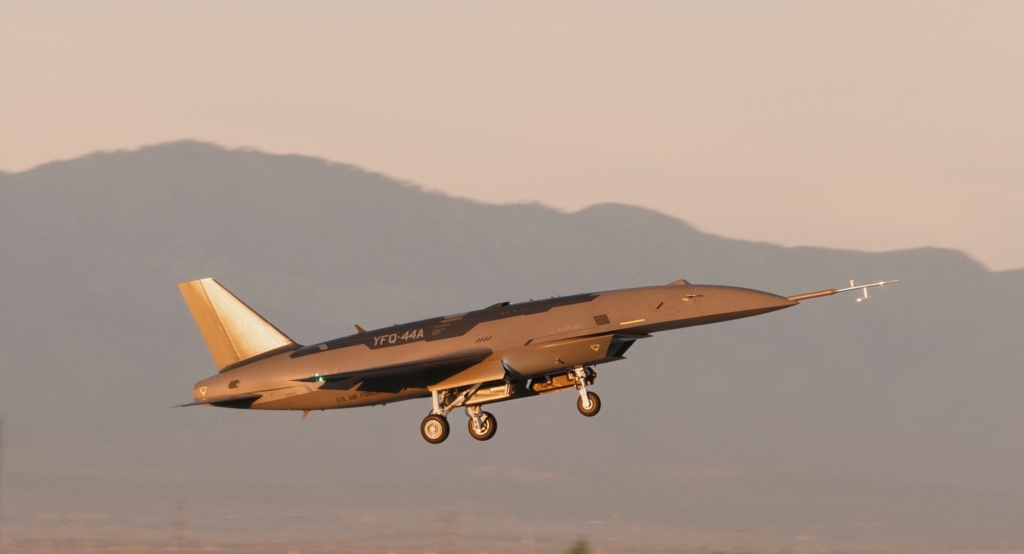
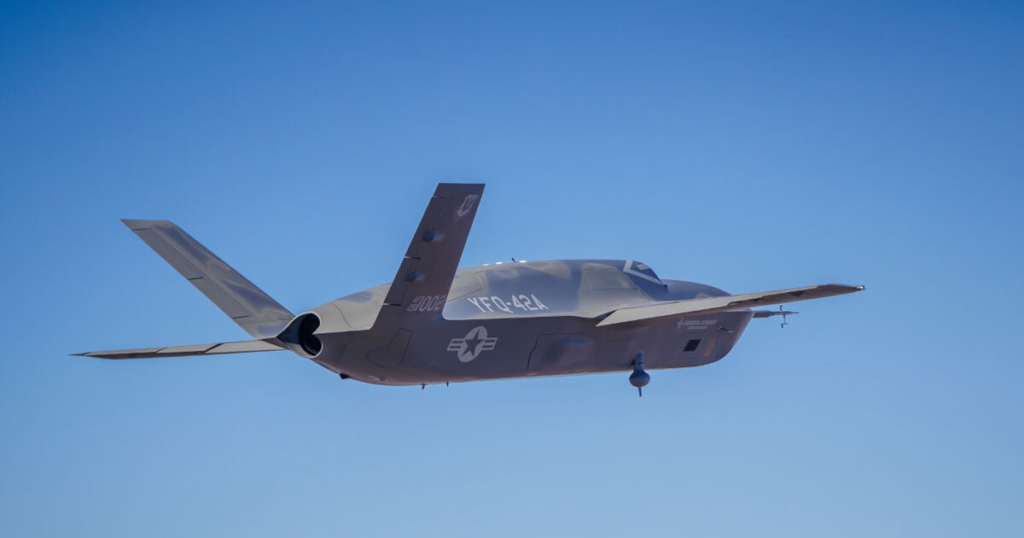
The US is currently rushing and General Atomics YFQ-42. Here, the speed of developing the capability matters more than optimisation.
Kaare Erickson, Senior Vice President of Strategic Campaigns for Combat and Strategic Systems at , spoke about how the company is planning to take advantage of this new emerging market.
However, Erickson says, 鈥渢he real inflexion point for propulsion is Increment 2, where the Air Force is deciding how much capability, range, survivability, and mission flexibility these platforms truly need.鈥�
These aircraft will need to operate in the Indo-Pacific, where range, electrical power, payload, embedded installations, and more will be important. Erickson says that with these requirements, 鈥減ropulsion becomes a primary driver of mission success.鈥�
Range drives requirements in the Indo-Pacific, which require higher efficiency and a cascade of other requirements. Meanwhile, smaller engines with very small cores struggle to generate the needed electrical power without incurring significant penalties.
To meet Increment 2鈥檚 needs, RR believes that the fastest way to deliver capability is to leverage its current engines, while also developing next-generation architectures in parallel and injecting those technologies to add capability only as necessary.
RR believes its AE 3007 engine is suitable for CCA
Erickson noted that RR is already well-placed thanks to the RQ-4 Global Hawk and . RR is also maturing its next-generation Orpheus engine family.

Erickson believes RR鈥檚 AE 3007 is already performing the sorts of missions the later CCAs will demand. The engine can fly at 60,000 feet and is certified to fly at almost Mach 0.935 in commercial service.
It believes the engine, with over 90 million flight hours and its production in Indianapolis, allows the USAF to reduce risks and accelerate timelines.
Next-generation Orpheus engine
Notably, Erickson said RR鈥檚 , but rather to break the traditional engine development model. But in doing so, the team developed a new engine that has potential for future autonomous aircraft.
He says they delivered a clean-sheet engine on a test stand in 18 months, something almost unheard of in the industry. says of Orpheus, 鈥淚n just under two years, the two experimental engines have been designed, manufactured and successfully tested.鈥�
From being a demonstrator and science experiment, Orpheus is a scalable engine family that can enable affordable propulsion capabilities across multiple autonomous missions.
RR believes these two engines position it well to offer the USAF a dual-path solution with both a mature, proven engine option and a next-generation engine family.