


Inside NASA’s X-59 Low-Boom Demonstrator
As the first major piloted NASA X-plane to fly in a generation and the first crewed, purpose-built U.S. high-speed research aircraft since the X-15 of the 1960s, the X-59 low-boom demonstrator is the agency’s 21st-century aeronautics flagship.
Aimed at collecting real-world acoustic data that could help enable supersonic travel anywhere over land or sea, the uniquely shaped X-59 has spent years in development but will soon become a familiar sight in the skies over Southern California as envelope expansion flights resume in the second quarter.
Envelope expansion flights set to begin
Community noise candidates to be finalized
Built by Lockheed Martin to NASA’s design, the X-59 research aircraft began flight tests on Oct. 28, when the project’s lead pilot, Nils Larson, flew the needle-nose design from Lockheed’s Skunk Works facility in Palmdale, California, to the nearby Edwards AFB. After extensive post-flight inspections and some rework, the aircraft is close to returning to the sky.
“I’d say we are finally at the starting line,” says Peter Coen, mission integration manager for Quesst—NASA’s quiet supersonic technology program of which X-59 is at the heart. “It’s been a long road, about 15 years, from ‘Hey, we think we can do this’ to flying for the first time.”
Having shepherded the X-59 to reality, Coen says the roots of the high-speed X-plane can be traced to 2008, when NASA started its N+2 and N+3 advanced aircraft concept studies. The initiatives laid out long-term goals to reduce fuel burn, noise and emissions for future subsonic airliners but also included studies of low-boom supersonic commercial transport aircraft.
Study contracts were awarded in 2009 to and Lockheed Martin, and NASA began supersonic research testing in November of the following year as part of the Experimental Systems Validations for N+2 Supersonic Commercial Transport Aircraft effort. The goal was to capture boom-relevant data from small-scale supersonic models built by the two airframers.
Initial tests of the and Lockheed Phase I concepts were conducted at the NASA Ames Research Center’s 9 X 7-ft. supersonic wind tunnel in late 2010 and Glenn Research Center’s 8 X 6-ft. supersonic wind tunnel in late 2012. Tests of improved Phase II designs with better boom characteristics and aerodynamics continued at Ames and Glenn through 2013, focusing on engine nacelle integration with the overall vehicle.
The wind tunnel work confirmed that engine positioning was key to enabling a low-boom airliner design. Mounted in a conventional underwing location, the tests showed that careful tailoring of the wing shape could help diffuse supersonic shock waves. But designs with engines mounted above the wing directed the shock wave upward and did not affect the ground signature. The caveat was that above-wing installations had potential performance penalties.
However, the wind tunnel results of both the low-boom potential and unusual engine-airframe aerodynamic configurations were surprisingly encouraging, Coen recalls. “That’s where we figured out, ‘Hey, this approach to reducing the boom would actually work for an airliner,’” he says.
At a subsequent program review meeting, Tom Irvine, then deputy associate administrator for the agency’s Aeronautics Research Mission Directorate, asked Coen what the next step should be. “We continue to work this and improve it, or we could go fly it,” he remembers saying. “Tom said, ‘That’s a pretty good answer,’ and that’s how the X-plane concept started.”
Although the X-plane plan initially met with a lukewarm reception from the U.S. Office of Management and Budget (OMB), continued support from NASA Associate Administrator for Aeronautics Research Jaiwon Shin, who served in the role from 2008 to 2019, helped keep it alive. “We kept refining the concept and then began working with [the International Civil Aviation Organization (ICAO)],” Coen says. “That’s when the idea finally coalesced that, ‘Hey, we could use this airplane to gather data about community response. Not just demonstrate the technology.’ Then OMB came on board.”
Initial design details of the new X-plane plan became public in February 2016, when NASA awarded a $20 million preliminary design contract for the low-boom demonstrator to Lockheed Martin, teamed with engine provider GE Aerospace. The unusual-looking aircraft was distinguished by a long nose to break up the bow shock; foreplanes and an engine inlet were mounted above a sharply swept but subtly shaped delta wing for shielding. It also featured a T-tail made up of small horizontal surfaces atop the fin to control the shocks and a lifting tail placed at the extreme aft of the slender fuselage.
As it appeared in 2016, the aircraft shape was completely different from NASA’s initial point of departure design from five years earlier. Originally incorporating a simple delta with a single upper-fuselage-mounted engine enclosed within a V-tail, the design quickly morphed to feature a mid-wing and “bump” engine inlet for boundary layer diversion. By the end of the concept formulation phase in early 2014, the V-tail also had been replaced by a single vertical fin and simple horizontal stabilators.
Starting in April 2014, the X-59 passed through a further series of concept refinement cycles, and by June 2015, it was recognizable as today’s X-plane with an extended nose, foreplanes, canted delta wing, stabilators and small T-tail.
“We never changed the requirements after the first four or five design iterations—the airplane looked basically the same,” Coen says. “It was just a matter of figuring out how to do an X-plane again.” Following a preliminary design review in June 2017, a contract to build the aircraft was awarded to Lockheed Martin in April 2018, marking the start of the detailed design phase. The finalized external configuration, dubbed C612, was settled about the time of the critical design review in September 2019.
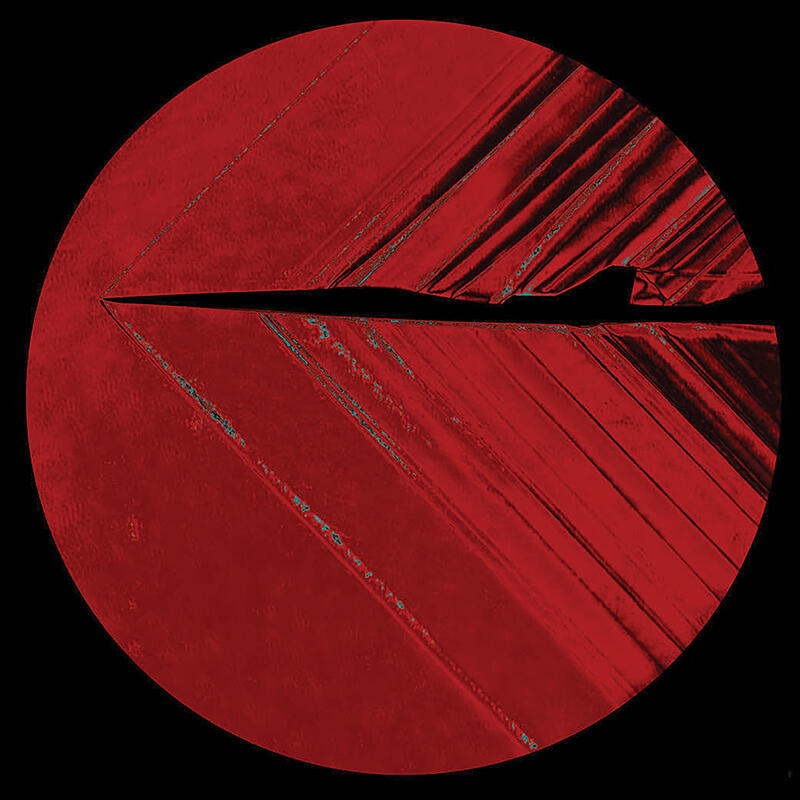
The aircraft is specifically shaped to produce a sine-wave-shaped sonic boom measuring 75 PLdB (perceived level decibels), a sound roughly comparable to a car door slamming around 20 ft. away. This contrasts with the 105 PLdB sound—equivalent to being inside the car when the door slams—made by the Concorde’s N-wave “double-bang.”
As the decibel scale is logarithmic, not linear, the difference between the Concorde and the X-59’s expected boom strength represents around a twentyfold reduction that NASA thinks can make a small supersonic airliner publicly acceptable.
The real work of the X-plane begins when it flies over populated areas to gather data on community response to low booms, particularly indoors, where shock waves can produce rattles. Data will be provided to the FAA and ICAO to inform a decision on whether to lift the ban on supersonic flight overland, which is seen as a prerequisite for economical commercial operations.
NASA says the low-boom mission remains highly relevant despite President Donald Trump’s executive order in June 2025 directing the FAA to lift the longstanding ban on overland supersonic flight. “The FAA is still committed to the work with ICAO because they, too, believe that the U.S. can’t really do that alone,” Coen says. “If you really want a global airplane, you’ve got to have a global rule.”
Originally, NASA planned to begin overflights in 2024 to provide noise data to ICAO in time for the 2028 Committee on Aviation Environmental Protection (CAEP) boom standard planning meeting. However, delays to the start of flight tests—initially planned for 2022—have pushed this target back to the CAEP/15 meeting in 2030.
While larger events, such as the COVID-19 pandemic, played a part in disrupting the aircraft’s development, NASA and Lockheed Martin acknowledge that integration and testing of components and systems have been more challenging than expected. This was partly driven by the cost-saving decision to incorporate off-the-shelf components from a variety of fighter aircraft, all of which needed to be integrated. These include Lockheed Martin F-16 main and nose landing gear, Lockheed Martin F-117 control stick, F/A-18E/F throttle control and Northrop T-38 rear canopy and ejection seat.
“X-planes aren’t what they used to be,” Coen says. “You used to be able to take the landing gear off a [Northrop] F-5, for example, and it was just wheels and an axle. But now, with an F-16 landing gear, it has extra sensors and speed control. It’s a lot more complicated. Plus, the F-16 landing gear design dates to the late 1970s, and where’s the data for that? Then you’ve got to make the F-16 gear talk to the other systems, such as the F-117 control stick. Trying to make all these things work together takes time.
“In hindsight, it might have been better to just take everything from an F-16, and just make it work,” Coen continues, noting that the complex flight test instrumentation system also has been a major integration task. “There have been a lot of challenges for the team, and we’ve had problems, but through it all, we’ve had a good working relationship with Lockheed.”
While the shape of the aircraft and some of its systems are unusual, the airframe is structurally conventional. The aircraft has three major sections—fuselage, wings and empennage—and 17 subassemblies, such as inlet duct, spine, engine nacelle, wing chine and flight control surfaces.
Aluminum makes up 61% of the airframe, and composite materials account for 22%—the bulk of which is used for the 38-ft.-long nose section, known as Segment-230. About 12% of the airframe is made up of titanium, and 5% is stainless steel and Inconel-Haynes 188, a high-temperature-resistant cobalt-nickel-chromium-tungsten alloy that is used for the aft deck beneath the engine exhaust nozzle.
The unique design and purpose of the X-59 also have driven a strong focus on structural modeling, testing and validation. Designers have been wary that the interaction of the flight control systems, structural elasticity and unsteady aerodynamics—the aircraft’s aeroservoelastic (ASE) characteristics—could increase its susceptibility to flutter.
“The control system only can do so much, and you must be able to manage the rigid-body flight dynamics with the ASE flight requirements,” said Walt Silva, X-59 structures lead and a senior research scientist at NASA Langley. “They have to work together very early on to make sure that you meet the desired goals.”
Silva, who spoke at the American Institute of Aeronautics and Astronautics Aviation Forum in Las Vegas on July 25, underlined how ASE analyses of the stability margins across the flight envelope have played a key role in the aircraft’s development. “When you look at this airplane, certain concerns just come up right away,” Silva said. “It has a long, slender fuselage, so it’s going to be more flexible. It has thin wings, which are also flexible. It has a large engine mass at the aft of the fuselage, which obviously adds to the flexibility and the dynamics of the fuselage.”

To manage these concerns, Silva said NASA and Lockheed teams collaborated and conducted independent verifications using a set of computational and experimental tools and processes. In addition to extensive wind tunnel tests and ASE analysis, computational verification included linear aerodynamic modeling, loads, thermal analysis, computational fluid dynamics aerodynamics analysis and finite element modeling (FEM).
The accuracy of the FEM, a computerized representation that is used to analyze structural integrity, simulate flight loads and ensure safety, is “of the utmost importance,” Silva said. “For every step of the FEM development, we perform flutter and ASE analysis, including, for example, early on the relocation of the rate inertial measurement units. Depending on where they’re located on the fuselage, it could or could not affect the feedback to the control system from the fuselage flexibility.”
Frequency notch filters have been applied to the flight control laws to reduce the magnitude of the feedback of the structural vibration response, preventing potential feedback instabilities and sinusoidal control surface commands. Upcoming envelope expansion flight tests will use a build-up in Mach and knots equivalent airspeed to verify that the X-59 is free from flutter and ASE instabilities.
A battery of nine structural tests was completed in 2020-24, including a 2022 proof-calibration stabilator test conducted separately from the full aircraft. “The stabilator is very important for the shock formations in the aft end, and we have to make sure we understand the structure and the aerodynamics extremely well to ensure that we can predict the resultant sonic ‘thump,’” Silva said.
A series of proof-calibration tests were completed on the full airframe. “The deflection of this aircraft as it flies is very important because that will affect the shocks, which will in turn affect the propagation, which will in turn affect the resultant boom on the ground,” Silva said. “Unlike most proof tests, we actually measured the deflections at the 1g loading condition so that then we can compare what we have to what we predict it should be.”
Predictions for the aircraft’s flight characteristics, as developed for the X-59 simulator, were highly accurate compared with the real aircraft, lead pilot Larson says. First flight “was exciting but uneventful,” he notes. “It flies a lot like the simulator, so that’s a good thing, because if you’ve guessed your aerodynamic model pretty well, then hopefully the flight control designers have also guessed well.”
One aspect different from the simulator, however, was the greater thrust of the aircraft’s GE Aerospace F414 engine—a feature that quickly became apparent to Larson on takeoff and to observers at Palmdale, who commented on the X-59’s sprightly climb rate. “In all the simulations, we had a midtime engine versus a brand-new engine, which has a little more thrust to it,” Larson says. “In the sim, you always pulled nose up to about 19-20 deg., and I had to get it up to 23-24-deg. nose high, so it was a bit higher than I thought because I was getting a little fast. We just got up to altitude way quicker.”
At just under the X-59’s 24,000-lb. maximum takeoff weight, Larson flew the aircraft to 12,000 ft. and conducted basic handling checks at speeds of 170-250 kt. while orbiting Edwards AFB. Following takeoff, test cards included evaluations of the autopilot system. “The next card was the full integrated test block at 200 kt.,” Larson says. “Then we went down to 180 kt. and did an integrated test block there. Then I went down to one Vref [reference landing speed], which at the time was 160 kt., and did the integrated test block there.
“The weird thing about this airplane is that for first flight, we were building down in speed, not up like you usually do,” Larson notes. “So we took off and went quickly to 200 kt. and then had to build down to slower speeds from there.” This was primarily due to concerns that ASE effects could be worse at lower speeds.
However, Larson did not encounter ASE issues at slower speeds. “Then it was my airplane to go and do some qualitative evaluation while I headed back to the pattern,” he says. “I did a low approach to the runway and an acceleration for the air data system. Then I brought it back around to land.”
Approach and landing were monitored using the NASA-developed external vision system (XVS), which compensates for the lack of forward visibility caused by the long nose by using a 4K-resolution camera, image processors and ultra-high-definition cockpit display. Mounted in a blister atop the nose just forward of the cockpit, the XVS also incorporates a retractable Collins Aerospace EVS-3600 multispectral infrared enhanced vision system located under the nose that deploys for takeoff and landing.
The system worked well on takeoff from Palmdale’s Runway 07-25, despite the aircraft being pointed almost directly into the Sun, Larson says. He used a manual contrast setting to offset the bloom of the Sun into the camera. For landing and the flight overall, the system “performed like a champ,” he adds.
To minimize landing loads, Larson was asked to touch down as gently as possible. Using the autopilot in gamma hold rather than speed hold mode, which maintained a constant slope descent, the X-59 landed at “1 ft./sec. or less,” he says. The touchdown was so soft that the aircraft’s flight control system did not transition from flight to ground mode. “We knew that being in the air in ground mode was not good, but being on the ground in air mode wasn’t that big a deal, particularly with a 15,000-ft.-long runway,” he adds.
In the upcoming envelope expansion, dubbed Phase 1, the X-59 is planned to fly to Mach 1.5 and altitudes up to 60,000 ft. This is intended to provide ample operating margin for the acoustic validation test period, or Phase 2. Depending on progress with envelope expansion, which is expected to cover 50-80 flights and carry on throughout most of the year, Phase 2 could start as soon as late 2026.
For Phase 2, NASA plans to install a series of 125 semi-autonomous ground recording systems along a 30-mi.-long line beneath the X-59’s flightpath in the supersonic corridor close to Edwards AFB. The tests are designed to validate the recording systems, which incorporate an Automatic Dependent Surveillance-Broadcast receiver along with a data acquisition processor that records audio, as well as waveform and spectral data. The acoustic validation phase is also designed to establish test procedures for Phase 3—the community noise tests.
“The idea is over the span of about a month, to make 30-40 flights over the community,” Coen says. “So we are better off taking the time now to make sure that everything’s working the way it’s supposed to, and everything is robust, than hurrying and getting to the end of Phase 1 and having a lot of work to do to make the airplane ready for Phases 2 and 3.”
Following Phase 2, which is nominally scheduled to last around nine months, NASA will begin initial community noise tests out of Armstrong Flight Research Center. “We will fly over some community nearby which is far enough away that they don’t hear booms on a regular basis, but close enough that we can come back,” Coen says. The X-59 design mission is to fly to an area up to 125 mi. from its base, perform two supersonic passes at Mach 1.4 and 55,000 ft. and return to base.
NASA is meanwhile coordinating with the FAA on a final list of other candidate communities. “We want something that represents the population of the U.S. in the aggregate,” Coen says. “So we’ll fly over different locations to get different geography, different demographics, different climates. We’ve got some selected sites, but nothing is finalized. The idea is still to meet the ICAO CAEP/15 timeline, so we need to get flying.”