
Amazon exits Commercial Drone Alliance, exposing rift over detect-and-avoid safety rules
drone delivery arm has withdrawn from a key industry body after a sharp disagreement over safety standards, laying bare deep divisions within the commercial drone sector at a time when regulators are preparing rules for large-scale operations.
The move, first reported by , centres on whether advanced 鈥渄etect-and-avoid鈥� (DAA) systems should be mandatory for drones operating beyond visual line of sight (), a question that goes to the heart of how can safely share airspace with crewed aviation.
础尘补锄辞苍鈥檚 Prime Air said it exited the Commercial Drone Alliance (CDA) because the group鈥檚 position was 鈥渋ncompatible鈥� with its own safety principles, according to a letter seen by Reuters.
Detect-and-avoid technology dispute drives 础尘补锄辞苍鈥檚 exit from CDA
At the centre of the disagreement is detect-and-avoid (DAA) technology, designed to enable drones to identify and manoeuvre around other aircraft, particularly those not transmitting their position.
Amazon has argued strongly in favour of making such systems mandatory. The company says its operational experience demonstrates the risks of not having this capability built into drones.
According to the letter, Prime Air has conducted more than 70,000 flights, during which its onboard systems executed two collision-avoidance manoeuvres that could otherwise have resulted in 鈥渃atastrophic safety consequences, including the loss of life.鈥�
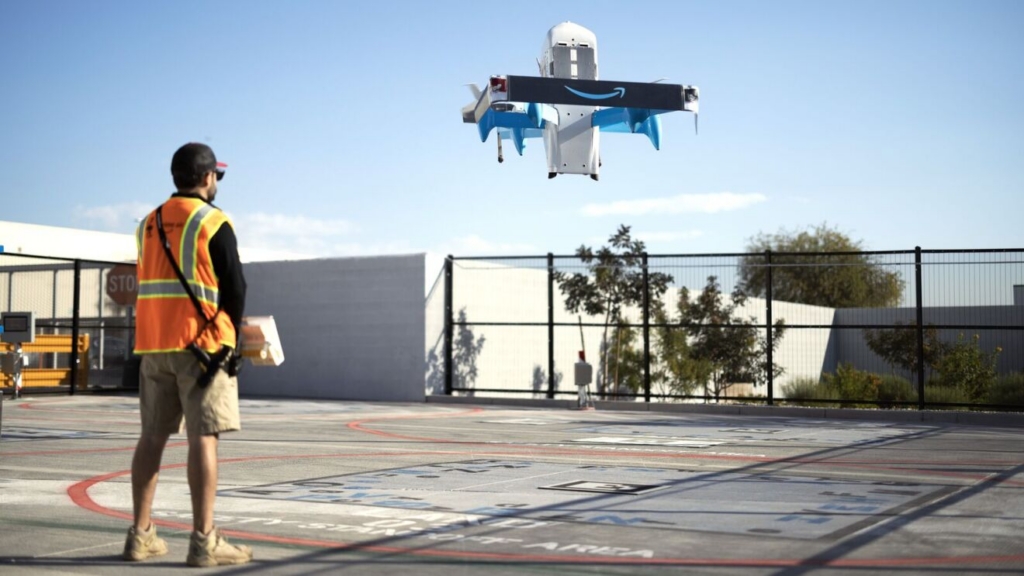
One of those incidents involved a helicopter that was not broadcasting its position through standard tracking systems, highlighting the challenge posed by so-called 鈥渘on-cooperative鈥� aircraft in shared airspace.
For Amazon, these examples reinforce the argument that large-scale drone operations cannot rely solely on external tracking systems or regulatory assumptions, but require onboard autonomy capable of responding in real time.
Commercial Drone Alliance backs performance-based drone safety rules
The Commercial Drone Alliance has taken a different position.
Rather than mandating specific technologies, the Washington-based trade body advocates for a performance-based regulatory framework, arguing that safety outcomes can be achieved through multiple technical approaches without prescribing a single solution.
The alliance has also raised concerns that strict requirements could increase costs and create barriers for smaller operators, potentially slowing innovation in a rapidly evolving sector.
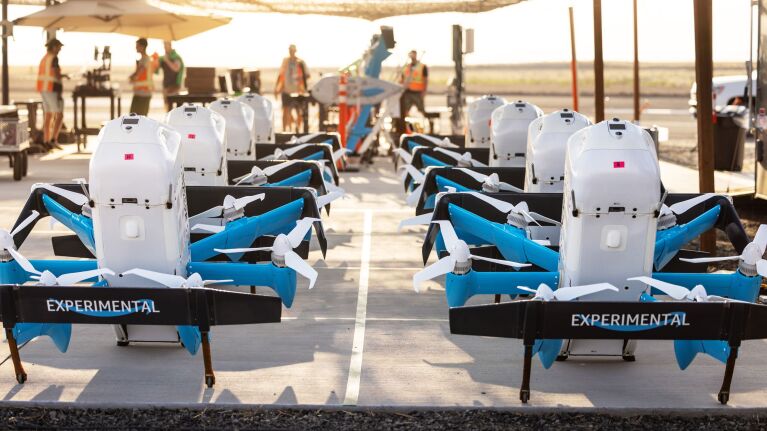
In response to 础尘补锄辞苍鈥檚 departure, the group said its members, including Skydio, Zipline and Alphabet鈥檚 Wing, have collectively conducted millions of drone flights safely, demonstrating that a flexible approach can work in practice.
The divergence reflects a familiar tension in emerging technologies: whether to standardise early around strict safety requirements, or allow innovation to proceed under broader, outcome-based rules.
FAA BVLOS drone rules: Regulatory battle over detect-and-avoid systems
The dispute comes as US regulators move closer to establishing rules that would allow drones to operate routinely beyond visual line of sight (BVLOS), a key step for scaling commercial delivery networks.
The Federal Aviation Administration has proposed requiring drones to detect and avoid aircraft that are not broadcasting their positions, to prevent mid-air collisions in increasingly congested airspace.

However, these proposals remain under review, and industry input is expected to play a significant role in shaping the final regulatory framework.
The Commercial Drone Alliance has been actively engaged in that process, working with policymakers, the White House and federal agencies on BVLOS rules, airspace integration and security concerns.
Drone industry split widens between major players and smaller operators
础尘补锄辞苍鈥檚 decision to leave the alliance underscores a widening divide within the drone ecosystem.
Larger, well-funded players such as Amazon have the resources to develop advanced onboard systems and may favour stricter standards aligned with their capabilities.
Smaller companies, by contrast, are more sensitive to the cost implications of mandatory technologies, particularly in a sector where margins remain tight, and commercial viability is still being proven.
Industry observers say that if regulators adopt 础尘补锄辞苍鈥檚 preferred approach, it could raise the technical and financial barriers to entry, potentially accelerating consolidation in the market.
A more flexible regulatory environment, however, could allow a wider range of players to compete, albeit with differing approaches to managing risk.
Airspace safety risks rise as drone traffic increases
The debate is not taking place in isolation.
Concerns about airspace safety have intensified in recent years, particularly in the United States, where congested flight corridors and mixed traffic, including drones, helicopters and fixed-wing aircraft, are becoming more common.
A while not involving a drone, has added urgency to
What 础尘补锄辞苍鈥檚 exit from the Commercial Drone Alliance means for the industry
础尘补锄辞苍鈥檚 Prime Air remains one of the most high-profile efforts to commercialise drone delivery, but it is far from alone.
Competitors, including Walmart, Alphabet鈥檚 Wing and a range of start-ups, are also expanding drone operations, particularly in last-mile delivery and logistics.
Yet the path to large-scale deployment remains complex.
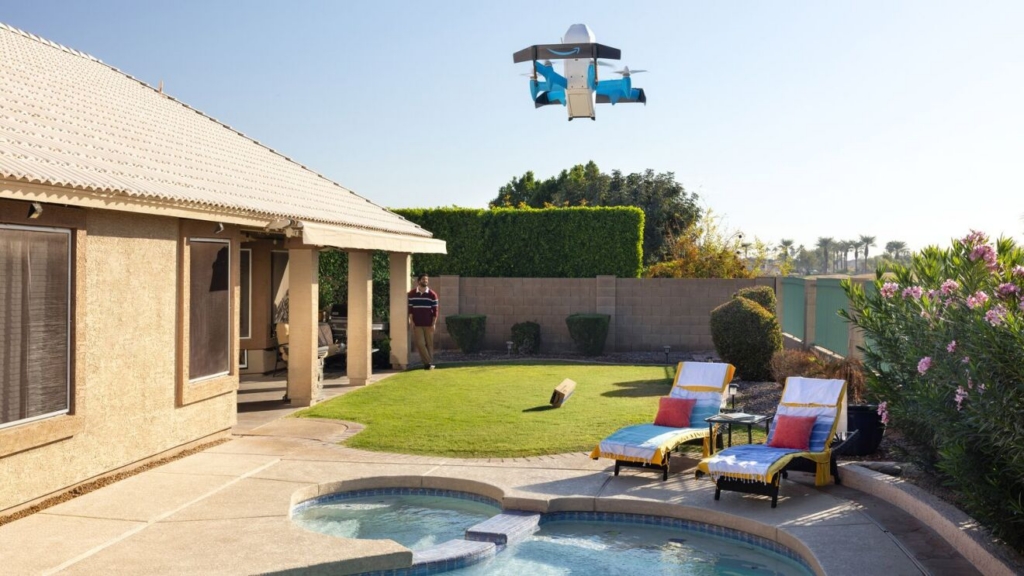
Technical challenges, regulatory uncertainty and public acceptance all play a role, and the current dispute highlights how even fundamental questions, such as how drones should avoid collisions, remain unsettled.
For now, 础尘补锄辞苍鈥檚 departure is unlikely to have an immediate operational impact, given that drone delivery still represents a relatively small part of its business.
However, the broader implications could be significant.
If regulators side with 础尘补锄辞苍鈥檚 push for mandatory detect-and-avoid systems, it could reshape the competitive landscape. If not, the sector may continue to evolve under a more flexible, but potentially fragmented, set of safety standards.